
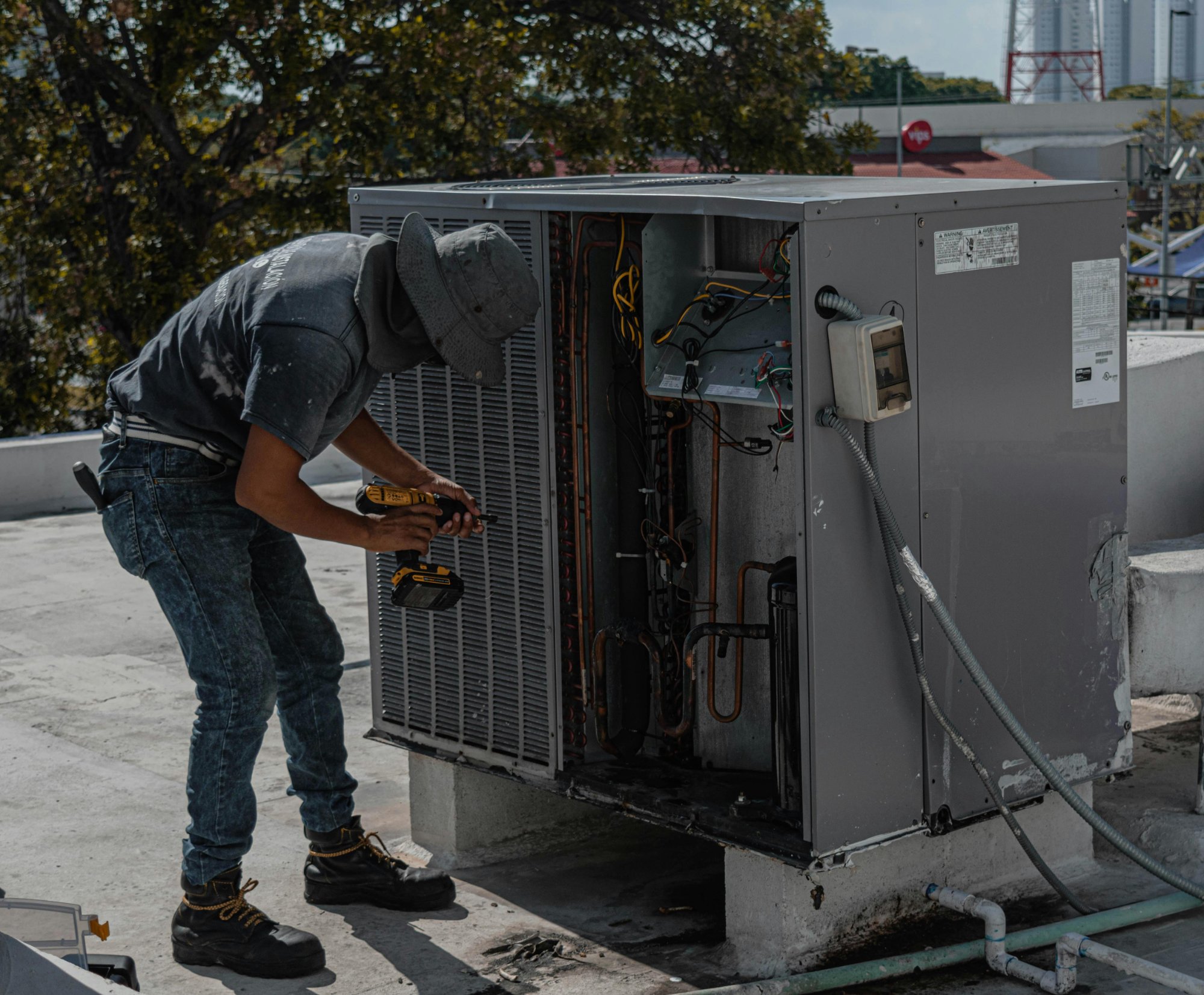
For years, HVAC people (us included) leaned on tidy rules of thumb for the repair-or-replace question: the "$5,000 rule" (age times repair cost, replace if it's over $5,000), or "replace at 15 years." In 2026, those rules are broken, because the refrigerant that's inside roughly every AC installed between 2010 and 2024 is being phased out, and that changes the economics of big repairs on older systems.
What changed
Two things, in opposite directions:
- Repairs on older systems are getting more expensive. Most 2010-2024 systems run on R-410A. Under the federal AIM Act, R-410A production is being phased down year over year, and its per-pound price rises as supply tightens, the same trajectory R-22 (Freon) followed a decade ago. Any repair that involves refrigerant (finding and fixing a leak, replacing a coil, recharging) costs meaningfully more than it did three years ago, and it will keep climbing.
- Replacement got more expensive too, then stabilized. New systems now use R-454B, and the changeover pushed equipment prices up through 2025. By mid-2026, availability is back to normal and pricing has settled at its new (higher) baseline. We broke down real numbers in How much does a new AC cost in Florida in 2026? One more thing to know: the federal 25C tax credit for high-efficiency systems expired at the end of 2025, so don't let anyone sell you a 2026 install with a phantom tax credit baked into the pitch.
The 2026 decision framework
Here's how we'd walk a family member through it, by system age:
Under 8 years old: repair it
Almost always. The system is likely still under parts warranty (check, most manufacturers give 10 years on registered equipment), and even a compressor swap under warranty is usually worth doing. The exception: repeated refrigerant leaks on a system that's been patched more than once. Chasing leaks on a young system usually means a bad coil, push for the coil replacement under warranty rather than annual recharges at 2026 R-410A prices.
8 to 12 years old: do the math, honestly
This is the gray zone, and the refrigerant question is now the tiebreaker.
- Cheap electrical and mechanical repairs, do them. Capacitors, contactors, fan motors, drain problems, thermostats: these are $150-$700 fixes that don't care what refrigerant you run. A 10-year-old system with a bad capacitor is not a replacement conversation.
- Refrigerant-side repairs, be careful. A leaking evaporator coil or a repair that needs several pounds of R-410A puts you into four figures on a system with maybe 3-5 Florida years left. Our lifespan reality check: Florida systems live 10-12 years unmaintained, 14-16 maintained (here's why). Spending $1,500-$2,500 to buy two or three more years is usually worse math than putting that money toward a new system, especially if your bills are creeping up from lost efficiency.
- Compressor failure out of warranty, replace the system. A compressor job on an out-of-warranty R-410A system routinely lands at $2,500-$4,000 installed. That's a third of the way to a new system that's more efficient, fully warranted, and running a refrigerant with a future.
Over 12 years old: lean replace, on your schedule
Past 12 Florida years, any major repair is a bridge, not a fix. The smart move at this age isn't waiting for the death rattle in mid-August, when every installer in South Florida is booked, emergency premiums apply, and you're choosing whatever equipment is on the truck. It's replacing on your own schedule: get quotes in the shoulder season, compare properly (see the sizing guide, size is the thing most companies get wrong), and take advantage of promotions and FPL rebates while your old system is still limping along as backup.
Planned replacements get better pricing, better equipment selection, and a proper load calculation. Emergency replacements get whatever is available, installed in a hurry, at peak-season rates, while your family sleeps in a 88° house. If your system is 12+ and this summer has been rough, start the conversation now, not when it dies.
Repairs that are almost always worth it, at any age
For balance, because we see companies use the refrigerant transition to scare people into replacements they don't need: capacitors, contactors, condenser fan motors, blower motors, drain line clogs and float switches, and thermostat issues are all economical repairs on almost any system that's otherwise healthy. If a tech looks at a 9-year-old system with a $30 bad capacitor and opens with "time to talk replacement," get a second opinion. (We'll happily be it.)
Questions to ask before you decide
- Is the failed part covered by the manufacturer's parts warranty? (Ask for the serial number lookup, don't guess.)
- Does this repair involve refrigerant, and if so, how many pounds, at what per-pound price?
- What's the system's true age and maintenance history, and what does its efficiency look like on the electric bill?
- If I repair today, what's realistically next on this system? An honest tech can tell you what else is marginal.
- What would the same money look like as a down payment on a new system, at today's financing and rebates?
That last question is the one we'll always answer in writing. Call (561) 503-3003 or request a visit online and you'll get a written flat-rate quote for the repair and a straight recommendation on whether it's worth it, from a family company that's happy to just do the $300 repair when that's the right call. Same-day service across Palm Beach, Martin, and Broward Counties. More on our AC repair service and replacement options.