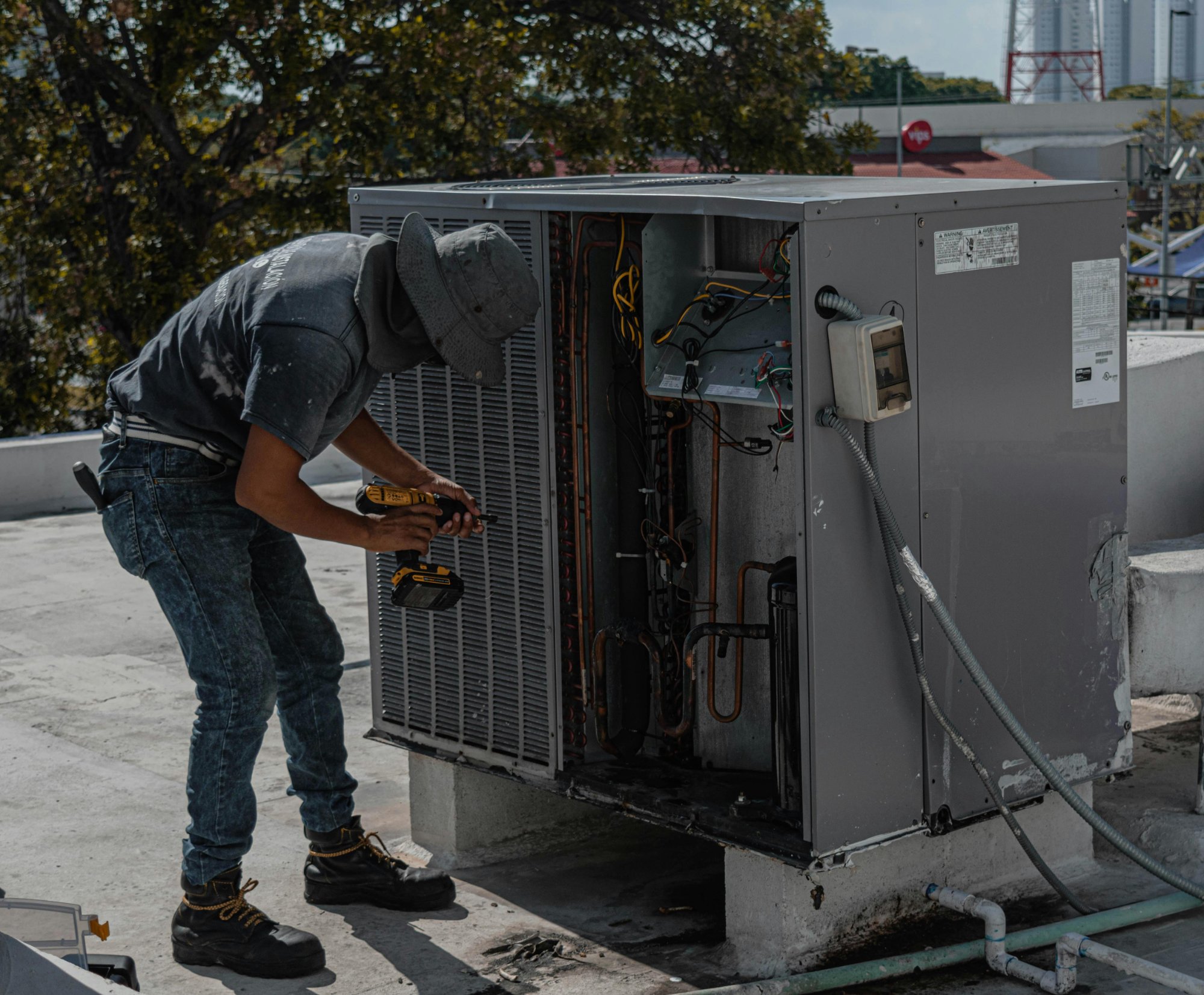

Here's a question we get on almost every August service call in South Florida: "Is it normal that my AC basically never shuts off?" And the honest answer is: sometimes yes, sometimes no, and the difference is worth a few hundred dollars a month on your FPL bill.
First, the uncomfortable truth about August in Florida
Residential AC systems are sized to a "design temperature", the temperature your area is at or below 99% of the hours in a year. For South Florida that's around 91-92°F. That means on a 94° August afternoon with a heat index over 105, your correctly sized AC is operating beyond what it was designed to hold, and it's supposed to run nearly continuously to keep up.
So: long run times on the hottest afternoons of the year are normal, and actually better than the alternative. An AC that's oversized enough to cruise through August afternoons would short-cycle the other ten months of the year, leaving your house cold-but-clammy. (Florida's real enemy isn't heat, it's humidity, and an AC only removes humidity while it's running.)
The question isn't "is my AC running a lot?" It's "is my AC holding the set temperature?" If the thermostat says 76 and the house is 76, long run times in August are the system doing its job. If the thermostat says 76 and the house is stuck at 80 at 9pm, something is wrong, keep reading.
What constant running costs you
Quick math. A typical 3.5-ton system draws roughly 3-4 kW while running. At FPL's residential rates (roughly 14-15 cents/kWh once you're past the first tier), every extra hour of runtime per day costs you about $13-$18 a month. An AC problem that adds four hours of unnecessary runtime a day is quietly adding $50-$70+ to the monthly bill, and cooling is already 40-60% of a typical Florida summer electric bill.
Which means a struggling AC often costs more in electricity than the repair that would fix it.
The six reasons an AC runs constantly but can't keep up
- A dirty filter or coil (check this first). Restricted airflow cuts cooling capacity dramatically, and it's the cheapest fix on this list. If it's been more than 60 days, change the filter today. If the filter's been neglected long enough, dirt has reached the evaporator coil, and that's a tune-up item.
- Low refrigerant. A system that's even 15-20% low on charge loses a big chunk of capacity and runs much longer to deliver the same cooling. Refrigerant doesn't get used up, if you're low, you have a leak that needs finding and fixing. (Low charge can also ice the system over entirely, see Why is my AC freezing up in summer?)
- Leaky attic ductwork. This is Florida's silent bill-killer. Your ducts run through a 130°F attic. If they leak 20% (common in homes 15+ years old), you're paying to cool the attic while pulling superheated air into the system. Duct sealing often pays for itself faster than any other AC investment.
- A tired compressor or failing capacitor. Aging components deliver less cooling per hour of runtime. A weak capacitor in particular makes the whole system labor, and it's a cheap part to replace before it fails outright.
- Sun load and thermostat placement. West-facing glass with open blinds can add a half-ton of heat load in the afternoon. And a thermostat on a wall that gets afternoon sun (or near a hot kitchen) will run the system long after the rest of the house is cool.
- The system is undersized, or the house changed. An addition, a converted garage, recessed lights punched through the ceiling, aging insulation, all of these add load the original system wasn't sized for. If your AC has never kept up, sizing is the suspect: What size AC do I need for my Florida home?
What actually lowers the bill (and what doesn't)
Worth doing:
- Set it at 76-78 and leave it. Every degree cooler adds roughly 6-8% to cooling costs. Use ceiling fans (they let 78 feel like 75) and turn them off when you leave the room.
- When you're out, go up 4-5 degrees, not off. Shutting the AC off entirely in a Florida summer lets humidity soak into drywall and furniture, and the system pays it all back (plus mold risk) when it fights back down. Set 82-83 when away, not off.
- Close blinds on sun-facing windows during the afternoon. Free, and bigger than people expect.
- Get the system tuned before the peak. Clean coils, correct charge, and a healthy capacitor are the difference between an AC that holds 76 efficiently and one that grinds all day. That's exactly what a professional tune-up checks.
Not worth doing: closing vents in unused rooms (it raises duct pressure and can cause freeze-ups), cranking the thermostat to 65 to "cool faster" (it doesn't cool any faster, it just overshoots), and running the fan in ON instead of AUTO around the clock (in humid climates this re-evaporates moisture off the coil back into your air).
When to call someone
Call a pro if the house can't reach the set point by mid-evening, if the bill jumped more than ~25% versus the same month last year without a rate change, if you hear the outdoor unit struggling to start (humming, clicking, dimming lights), or if the system is icing up. Any of those means the constant running isn't August, it's a fault, and it's costing you twice: once in comfort and once on the bill.
We'll give you a straight answer either way. Call (561) 503-3003 or book online, same-day service across Palm Beach, Martin, and Broward Counties, honest diagnosis, written flat-rate quotes.