Every June 1, Floridians collectively eye the Atlantic and start making plans. We board windows, fuel generators, stock up on water, and check the trees. The thing most homeowners don't think about: your AC is one of the most valuable items in your home that's just sitting out there in the storm path, and it's also one of the most expensive things to replace.
Here's the full prep checklist we walk our Champions Club customers through every year. Some items are 5-minute things you can do yourself this weekend. Others are upgrades worth scheduling before the season ramps up.
Before the season (March-May)
1. Get a pre-season tune-up
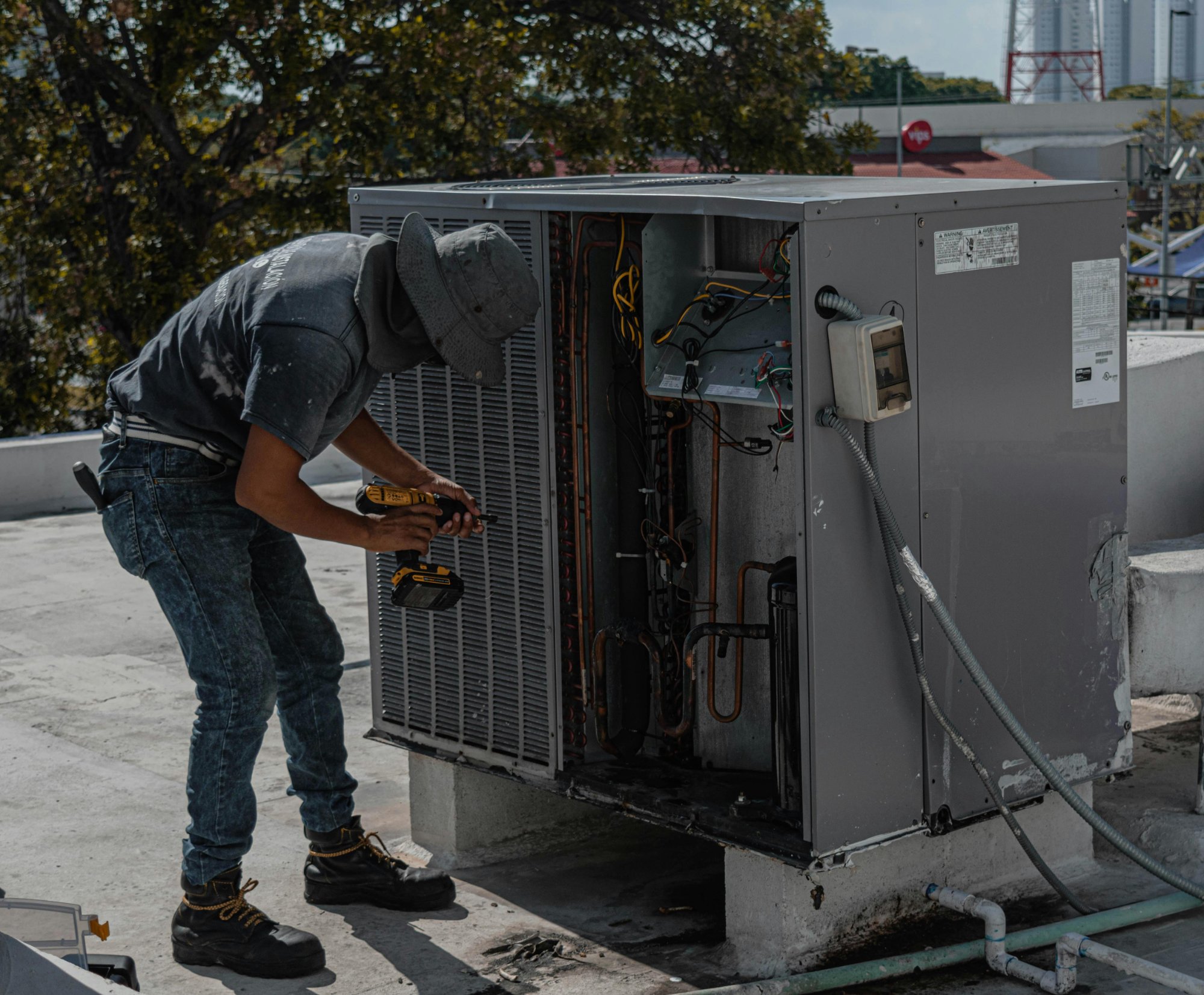
This is the most valuable single thing you can do. A spring tune-up identifies and fixes weak components (capacitors, contactors, refrigerant slow-leaks) before they're tested by 110-amp surge during a storm restart. We catch capacitors that would have died on the next hot day; we tighten loose electrical connections; we clean condenser coils so they can shed heat efficiently when you need them most.
If you haven't had a tune-up in over a year, schedule one now. Champions Club includes two per year, and they're heavily discounted compared to one-off service rates.
2. Install (or verify) hurricane tie-downs
Florida code requires AC condensers to be secured against high winds. The standard is a set of straps or brackets bolted into a concrete pad, rated for the wind load in your zone (in coastal Palm Beach and Martin Counties, that's 175+ mph). If your condenser was installed before 2010, or if it sits on a wood pad, it might not meet current code.
Tie-downs are the difference between your AC staying put during a Cat 3 and it ending up in your neighbor's pool. Most installations include them; older ones often don't. We check this on every tune-up.
3. Add surge protection
Lightning is the #1 cause of compressor failure in Florida, by a wide margin. A whole-home surge protector at your electrical panel costs about $300-450 installed and protects every appliance simultaneously. An AC-specific surge protector at the disconnect (the gray metal box on the wall by your condenser) costs about $150-250 and protects just the AC.
Both are worthwhile. The whole-home version is the better deal if you have lots of expensive electronics; the AC-specific version is the cheap insurance for a piece of equipment that costs $5,000+ to replace.
Florida averages more lightning strikes per year than any state in the US. When power goes out and comes back, the surge during restoration can be more destructive than the outage itself. A $300 surge protector pays for itself the first time it intercepts a single damaging surge.
4. Trim trees near the condenser
Your outdoor unit needs at least 2-3 feet of clearance on all sides for proper airflow, and ideally more. During a storm, branches that are too close become projectiles. Take this as a reminder to trim back anything within 5-6 feet of the unit, and look up: any limbs that could fall onto the unit need to come down too.
When a storm is approaching (24-72 hours out)
5. Cool the house in advance
Once a hurricane warning is in effect, drop your thermostat down a few degrees and cool the house aggressively for 24-36 hours before landfall. The pre-cooled mass of the home (drywall, furniture, floors) will help maintain comfort for hours after you shut the AC off, important if you lose power for an extended period.
6. Shut off the AC properly
When tropical storm-force winds are forecast (typically 12-24 hours before landfall):
- Set the thermostat to OFF.
- Walk to the outdoor disconnect (the gray metal box on the wall next to your condenser). Open it, and pull the disconnect handle to the OFF position. Some have a pull-out block instead, pull it out and store it nearby.
- If you have an indoor air handler with a separate breaker, flip that off too.
This protects the system from electrical surges and prevents the AC from trying to start during the storm if power flickers.
7. Decide on a cover (probably not)
Most manufacturers recommend leaving the unit uncovered. Trapped moisture from a wrapped tarp can cause more damage than direct rain. If you're in a true flood zone or have specific concerns about debris, a fitted hurricane cover (rated for high winds, properly secured) can help. Never use a tarp or generic cover, they'll detach in 60+ mph winds and become projectiles.
Post-storm: the restart sequence
This is the part most homeowners get wrong. The temptation is to flip everything back on as soon as power returns. Don't.
8. Wait for stable power
When the grid first comes back after a hurricane, it's often unstable, voltage fluctuations, brownouts, surges as crews work on segments. Wait until you've had stable power for at least 2-3 hours before turning the AC back on.
9. Inspect the outdoor unit
Before flipping any switches, walk around the condenser:
- Is it standing in water? If yes, do not turn on. Call a tech.
- Are the fins on the coil mangled? Some bent fins are okay; major damage means service before restart.
- Is debris stuck inside the unit? Branches, leaves, palm fronds, clear them out (with the disconnect still off).
- Is the unit still on its pad? If it shifted or tilted, the line set may be damaged. Don't restart.
- Are electrical connections damaged? Visible burned spots, melted insulation, exposed wires, that's a service call.
10. Inspect the indoor unit
If your air handler is in the attic and water got in through the roof, it may be sitting in standing water or have damp insulation around it. Don't turn the system on if that's the case, you risk shorting out electrical components and pumping mold-laden air through the home.
11. Restart slowly
If everything looks good:
- Flip the outdoor disconnect back to ON.
- Turn the indoor breakers back on (if you flipped them).
- Wait 5 minutes (this allows the compressor crankcase to fully energize).
- At the thermostat, turn the fan to ON for a few minutes (no cooling), this confirms the blower works without stressing the compressor.
- Then turn the system to COOL, with setpoint several degrees above current room temp.
- Listen for unusual sounds. Watch the air handler for proper airflow. After 10-15 minutes, check that the air at the vents is cooler than the air at the return.
If anything seems off, sounds, smells, performance, shut it back down and call a tech before running it further.
If your unit was flooded or destroyed
Major hurricane damage typically falls into two buckets:
- Water intrusion or flooding. A submerged condenser is essentially condemned, the electrical components and motor windings are compromised even if the unit looks intact. Don't try to start it. Document the damage with photos for insurance, and call us for an honest assessment.
- Wind damage / projectile impact. If a tree fell on your unit, or it tipped over, or it was lifted off its pad, you'll need an inspection at minimum and likely replacement.
Most homeowners insurance covers AC damage from named storms, but you need photographs, the damage report from a licensed contractor, and prompt filing. We routinely work with insurance adjusters on post-hurricane damage claims and can document what was covered and what wasn't.
What to do this week
If hurricane season is approaching and you haven't done the prep:
- Schedule a tune-up if you haven't had one this spring. (Champions Club members: yours is included.)
- Add surge protection if you don't have it.
- Trim trees near the unit.
- Verify your tie-downs are current code.
We do all of this as part of routine service. (561) 503-3003 or request a visit. Palm Beach, Martin, and Broward Counties.